Do I Have to Give My Name or Say Why I Want Florida Public Records?
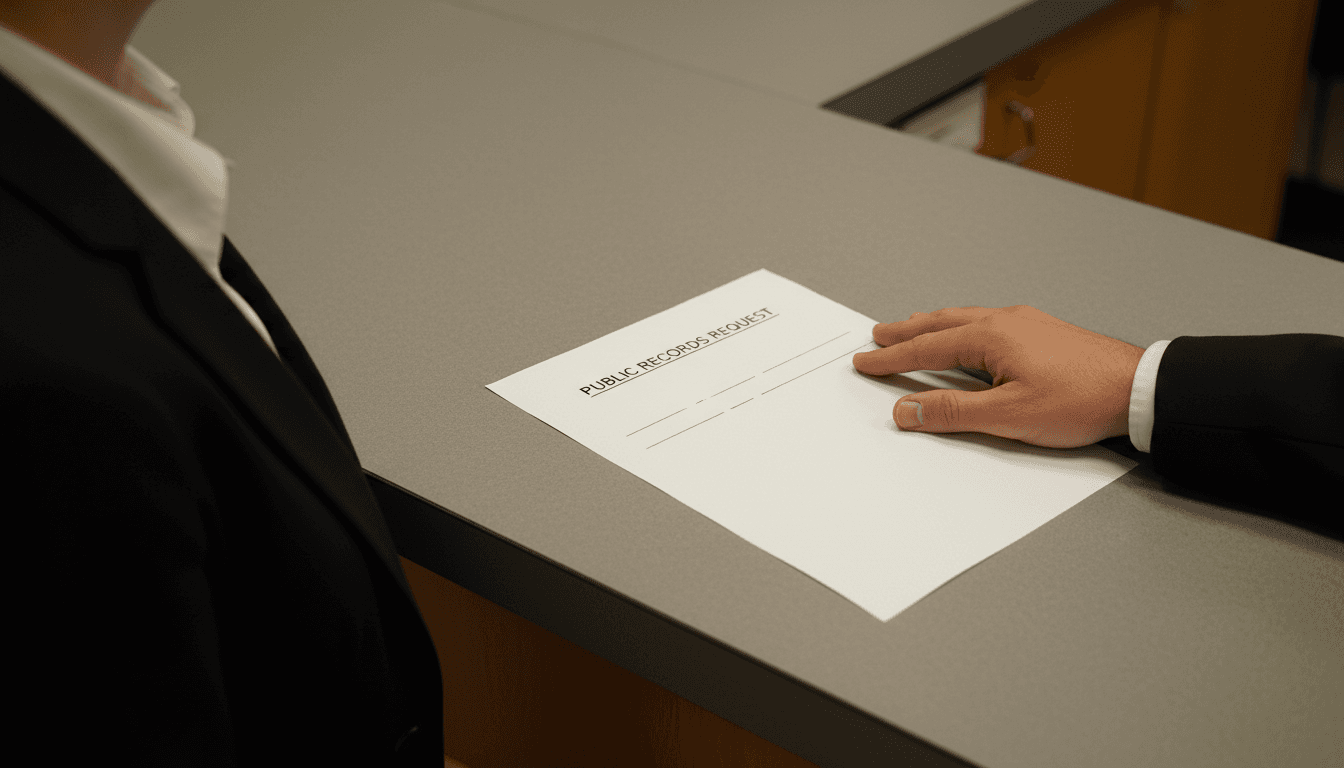
After reading this, you will know exactly what a Florida agency can and cannot ask you before producing public records, including whether you have to identify yourself or explain why you want them.
The short answer
No. Florida law does not require you to give your name, show ID, or say why you want a public record. The right of access runs to any person. If an agency conditions production on identification or purpose, it is acting outside the statute.
There is one narrow practical exception. If you want copies delivered, the agency needs somewhere to send them. That is logistics, not an identity requirement, and the address does not have to be your legal name.
What section 119.07 actually requires of the requester
Section 119.07(1)(a), Florida Statutes, opens public records to any person. The statute does not list things the requester has to produce first. There is no name requirement, no ID requirement, and no purpose requirement. The constitutional source for the right sits at article I, section 24 of the Florida Constitution, which the courts read broadly.
The Attorney General's Government-in-the-Sunshine Manual states the rule plainly. A requester is not required to disclose name, address, telephone number, or background information to the custodian, unless a separate statute requires the custodian to collect that information before releasing the particular record. The motive for the request is also irrelevant.
Why agencies still ask, and what to say back
Even though the statute is clear, front-counter staff often ask anyway. Two scripts cover most of it.
The "we need it for our log" ask
Some agencies keep an internal log of who asks for what. Internal logging is the agency's choice, not the requester's burden. You can decline. A polite version: "I am making a public records request under chapter 119. I am not required to provide identification, and I am declining to do so. Please proceed with the request."
The "we need to verify you" ask
Verification of identity is not a precondition to access for most records. If the agency claims a verification requirement, ask which statute imposes it for this specific record category. If the agency cannot point to one, the request stands.
When you do have to give something
Electronic delivery and a return address
If you ask for copies to be mailed or emailed, the agency needs a destination. A mailing address or an email address is enough. The address does not have to match a government-issued ID, and it does not have to be your legal name. A P.O. box, a generic email, or a forwarding address all work.
Certain narrow record types with statutory ID rules
A small number of record categories carry their own statutory rules on who can get them and what the requester must show. Examples include certain driver and vehicle records, some health information, and a handful of categories that cross-reference federal law. These are the exceptions, not the default. Identify the category first and check the controlling statute for that record type.
Practical script for staying anonymous
In person
Walk in. Ask to inspect the records. If the clerk asks for ID, decline politely and cite chapter 119. If the clerk insists, ask for a supervisor and ask for the refusal in writing under section 119.07(1)(f).
By mail
Send a one-page request to the records custodian. Use a P.O. box or a forwarding address as the return address. Sign with whatever name you prefer. The agency does not get to verify it.
By email
Use a generic email address. State the records you want, the format you want, and a delivery address. Do not volunteer personal information the statute does not require.
One real-world caveat. Anonymity at the statutory level is not the same as operational anonymity. Email headers, IP addresses, and metadata leave a trail. Chapter 119 says the agency cannot demand your identity. It does not promise that nothing about the channel you used will reveal it.
If the agency refuses without your name
Ask for the refusal in writing with the statutory citation. Section 119.07(1)(f) requires the custodian to state, in writing and with particularity, the reason for the conclusion that the record is exempt or confidential. A refusal based on "we need to know who you are" is not a statutory exemption. Putting the agency to the writing requirement often resolves the standoff without a lawsuit.
If the standoff continues, the next step is what to do when an agency stalls.
Related
- How to file a Florida public records request
- What to do when a Florida agency stalls
- What is a public record under Florida law
Frequently asked questions
- Do I have to tell a Florida agency why I want public records?
- No. Florida law does not require you to state a purpose. Section 119.07(1)(a), Florida Statutes, makes records open to any person without a reason.
- Can I request records anonymously in Florida?
- Yes for inspection or pickup. For mailed or emailed delivery you need a return address, but it does not have to be your legal name.
- Can the agency demand my driver's license?
- Generally no. A narrow set of record categories carry their own statutory ID rules. Most public records do not.
- What do I do if they refuse without my name?
- Ask for the refusal in writing with the statutory basis under section 119.07(1)(f), Florida Statutes. That alone often unsticks the request.
- Can I use a pseudonym?
- Yes. The statute does not condition access on identity. There is no penalty for declining to give a name.
Not legal advice. Educational and informational content only. Reading this site does not create an attorney-client relationship. For advice on a specific matter, consult a licensed Florida attorney.